Twenty islands. Local hosts.
Ecuador · Spanish
Galápagos Islands
Where evolution still walks the lava
Your host · Spanish
Andrés
Naturalist host
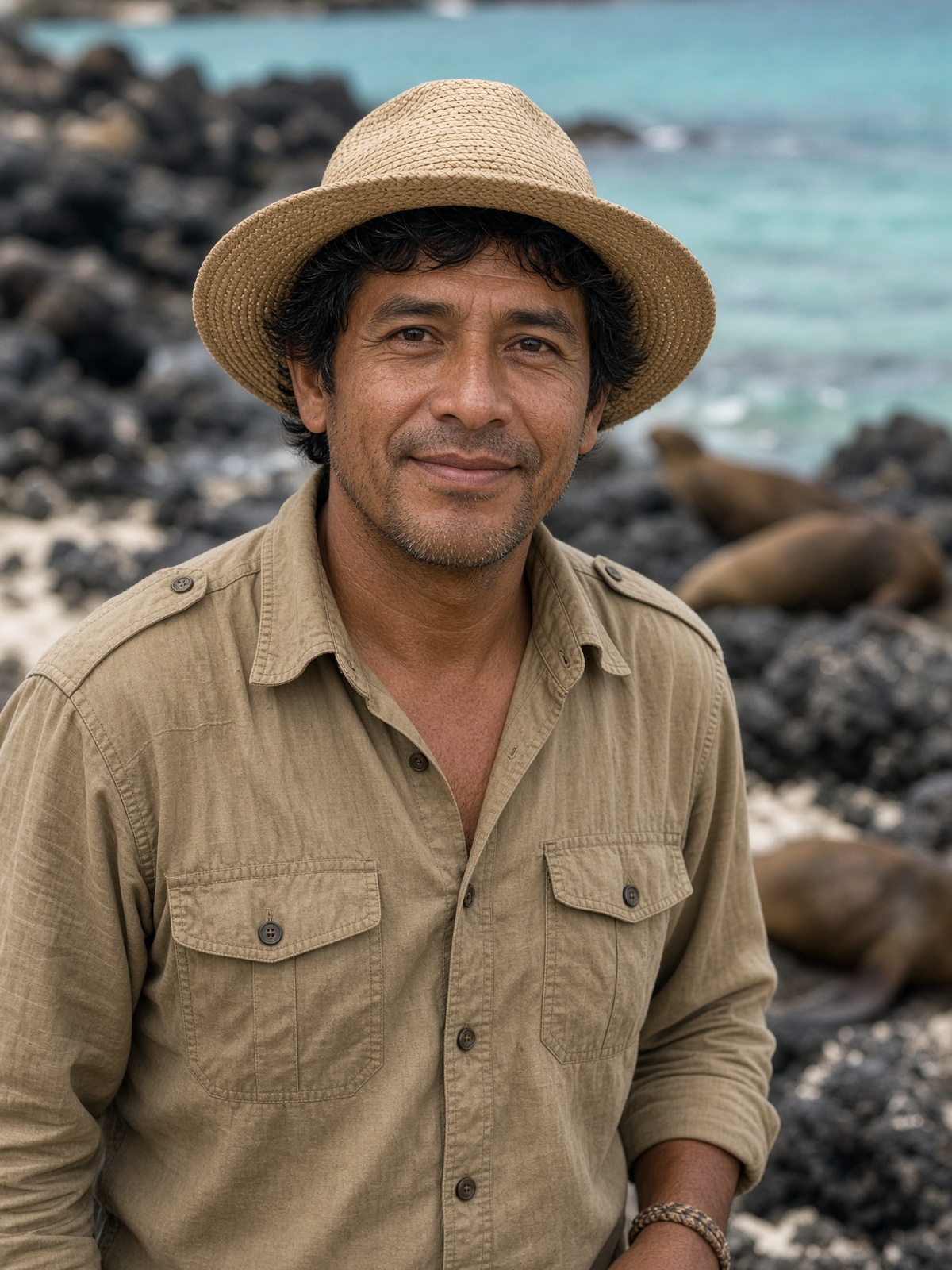
Andrés trained as a naturalist in the islands he still calls by their old names. He would rather you notice a finch's beak than another photograph of a tortoise, though he loves both.
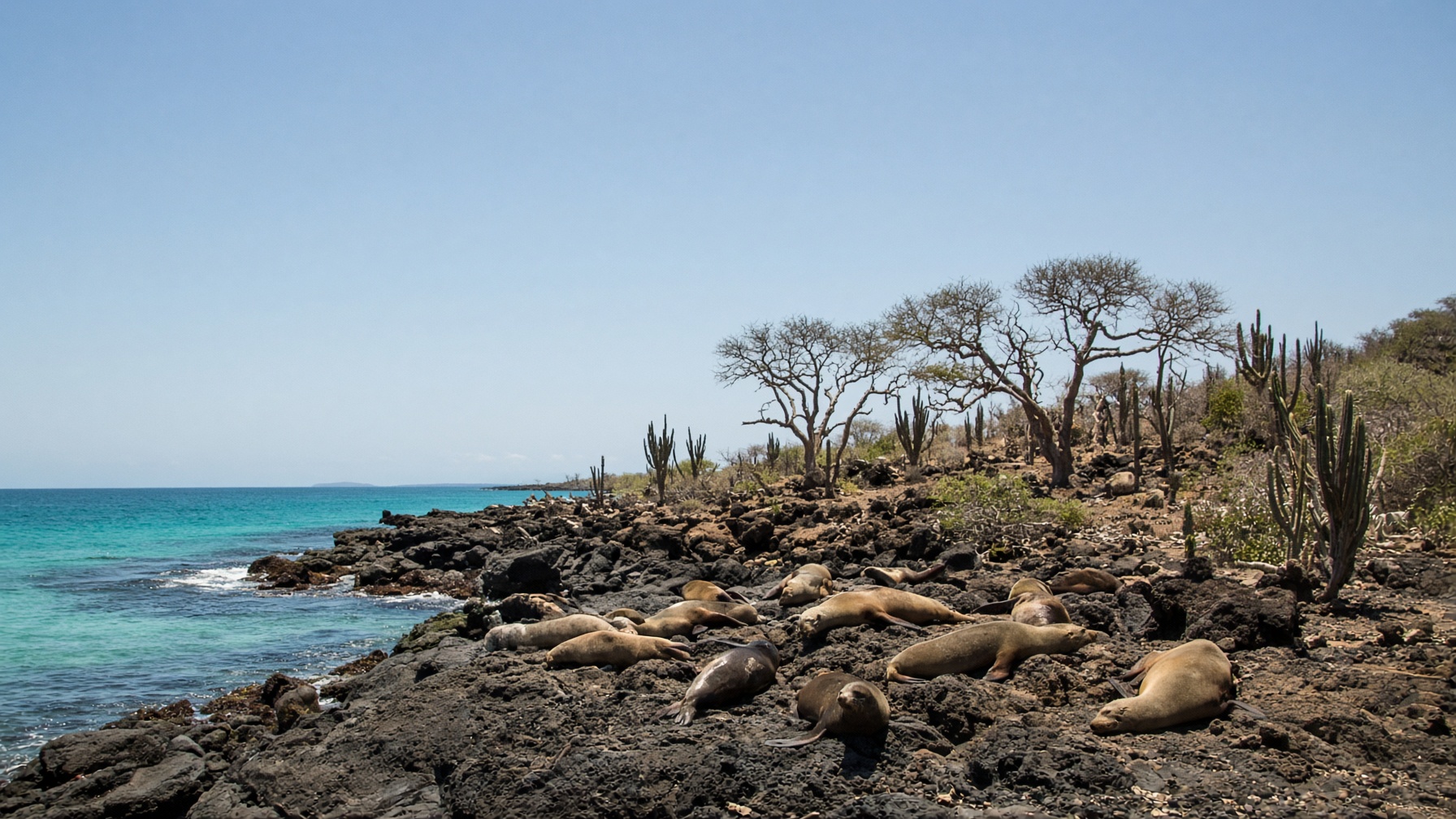
The Galápagos are young volcanoes in a cold current, famous for animals that never learned to fear us. Native edible plants are few — giant opuntia, wild tomato, endemic guayabillo — and most fruit on the inhabited islands was brought by settlers. What is wild here still rewrites the textbook: penguins on the equator, iguanas in the surf, finches that change their minds about beaks.
Field notes
10 fruits
Cactus tuna
Tuna de cactus
Opuntia echios
Endemic giant prickly pears, some tree-sized, bear the archipelago's true native fruit: a seedy tuna that tortoises, land iguanas, and people all contest. This is not garden cactus; it evolved here, pads and all, to outgrow the mouths that eat it.
Galápagos wild tomato
Tomate silvestre
Solanum cheesmaniae
A salt-tolerant endemic tomato of lava and coastal scrub, small, yellow-to-orange, and important to plant breeders. Two wild species grow here; introduced garden tomatoes now threaten them with hybridisation.
Galápagos guava
Guayabillo
Psidium galapageium
An endemic relative of guava, a small tree of the transition zone with modest, fragrant fruit. It is native; the common guava that invaded the highlands is not, and the two should not be confused.
Banana
Guineo
Musa acuminata
Grown in the humid highlands of Santa Cruz, San Cristóbal, and Isabela, bananas are a settler crop, not a native plant. They feed the towns; they do not belong to the lava.
Papaya
Papaya
Carica papaya
An introduced garden fruit of the agricultural zones, producing in the same volcanic soil that grows coffee. Wild Galápagos has no papaya; breakfast plates do.
Orange
Naranja
Citrus x sinensis
Citrus was planted by settlers, most famously in the highlands and on Floreana, and still fruits in fincas. Like most Galápagos orchard fruit, it is cultivated, not endemic, a mainland taste on an oceanic island.
Passion fruit
Maracuyá
Passiflora edulis
Introduced vines now run through highland farms and, in places, into native vegetation. The fruit is tart and generous; the plant is a guest that did not stay in the garden.
Common guava
Guayaba
Psidium guajava
Brought for fruit, now an invasive tree of the humid highlands, shading out endemic plants including guayabillo. The fruit is fragrant and seedy; ecologically it is one of the archipelago's hardest lessons.
Coconut
Coco
Cocos nucifera
Palms were introduced to inhabited coasts and do not belong to the original Galápagos flora. Their water is still the first drink after a crossing, a Pacific habit planted on a Pacific island that never had it.
Pineapple
Piña
Ananas comosus
Cultivated in the wetter highlands of the populated islands, another settler fruit in red volcanic soil. It sweetens kitchen tables in Puerto Ayora and Puerto Baquerizo; it does not grow on the uninhabited lava.