Twenty islands. Local hosts.
Saint Lucia · Kwéyòl
St. Lucia
Twin Pitons, cocoa steam, and a parrot in the canopy

Your host · Kwéyòl
Amara
Creole host
Amara learned Kwéyòl in the markets of Castries and cocoa from her grandmother's sticks. She walks guests from the Pitons to the canopy, talking fruit, birds, and the island's two languages as if they were one.
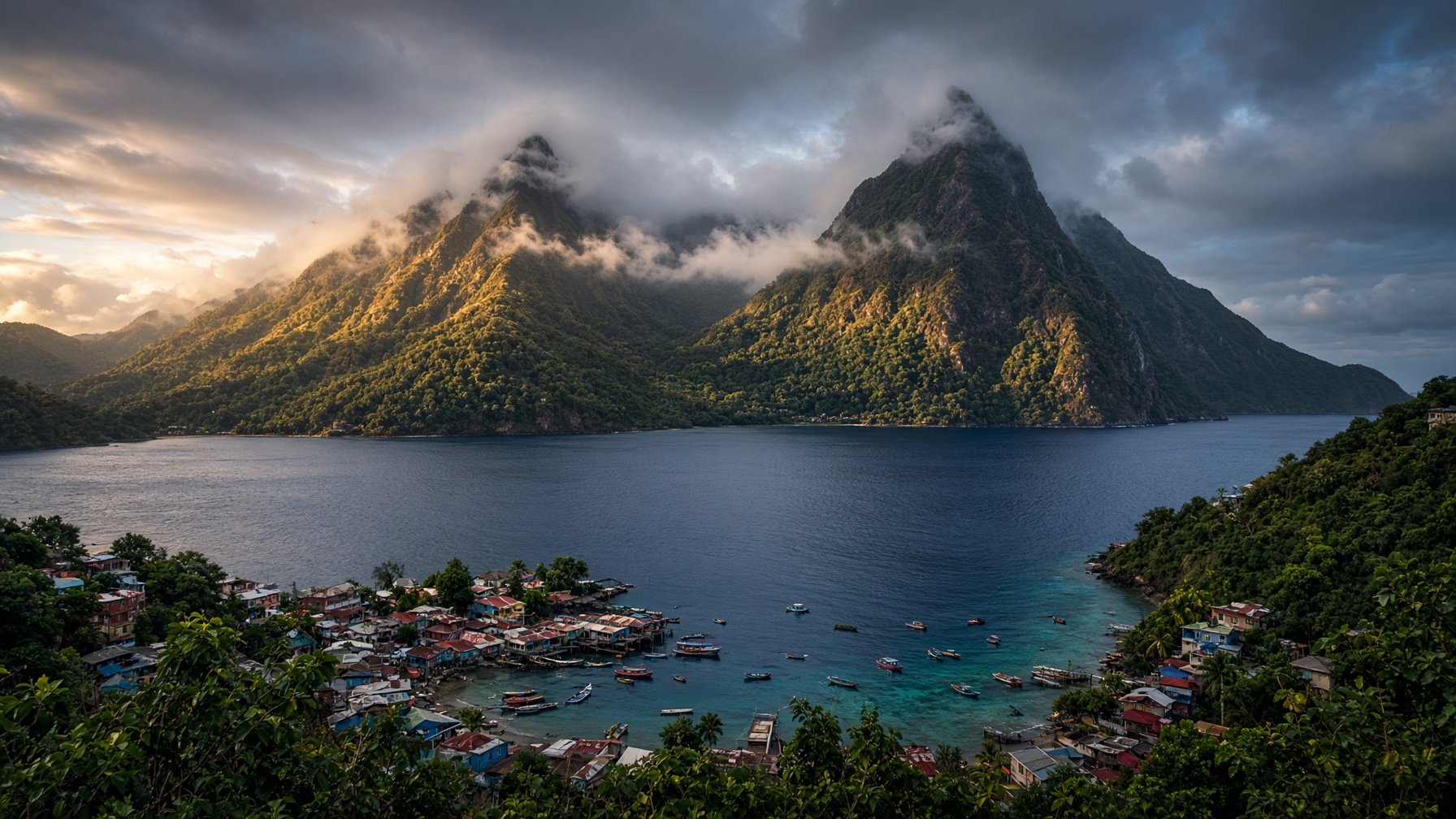
Saint Lucia rises steeply from the sea, the Pitons punching through cloud above rainforest and banana valley. Kwéyòl is spoken in the kitchen and English in the office, and both languages know the same fruits: golden apple, breadfruit, cocoa. The jacquot, the island's parrot, still holds the high forest.
Field notes
10 fruits
Golden apple
Pomme cythère
Spondias dulcis
Crisp, golden-amber fruit with a pineapple-mango tang and a spiny stone, eaten green with salt or ripe off the tree. In Saint Lucia it is juiced, pickled, and argued over in every backyard that has a pom sitè.
Breadfruit
Bwapen
Artocarpus altilis
Captain Bligh's cargo became an island staple: roasted, fried, or boiled as a ground provision that eats like bread and potato at once. Festivals still honour the tree that feeds a valley when bananas fail.
Julie mango
Mango Julie
Mangifera indica
The mango Saint Lucians wait for: small, flat, almost fibre-free, with flesh that tastes of resin and honey. Julie trees mark old estates and roadside corners from Gros Islet to Vieux Fort.
Cacao
Kako
Theobroma cacao
Pods ripen on the trunk in the shade of taller trees, split to a white pulp around bitter beans. Those beans are dried, roasted, and rolled into the cocoa sticks that become morning té kako.
Banana
Fig
Musa acuminata
Fig is breakfast, lunch, and the old export that built the valleys. Sweet bananas and cooking plantains hang in every garden, the bunches wrapped against bats and the rain.
Soursop
Kowòsol
Annona muricata
A prickly green fruit whose white pulp is blended into juice and ice cream, tasting of strawberry, pineapple, and cream. Leaves go into bush tea; the fruit itself is a Saturday-market prize.
Passion fruit
Grenadin
Passiflora edulis
Vines scramble over fences and cocoa, dropping wrinkled purple shells full of seedy, perfumed pulp. Grenadin juice is sharp enough to cut the humidity, sweetened just until it stops wincing.
Coconut
Koko
Cocos nucifera
Coastal palms give water, jelly, oil, and the milk that rounds out callaloo and cocoa tea. Chopped open with a cutlass, a young koko is the first drink after a walk in the heat.
Pineapple
Zannanna
Ananas comosus
Small, intensely sweet pineapples grow in the drier south and in kitchen gardens. Eaten in spears at the market, they are the island's own gold, not the pale export kind.
Guava
Gwayav
Psidium guajava
Pink- or white-fleshed, seedy, and fragrant enough to find before you see the tree. Gwayav is eaten out of hand, boiled into jam, and juiced until the air around the stall smells of it.